
Plantation to Plant Transformation in Gramercy
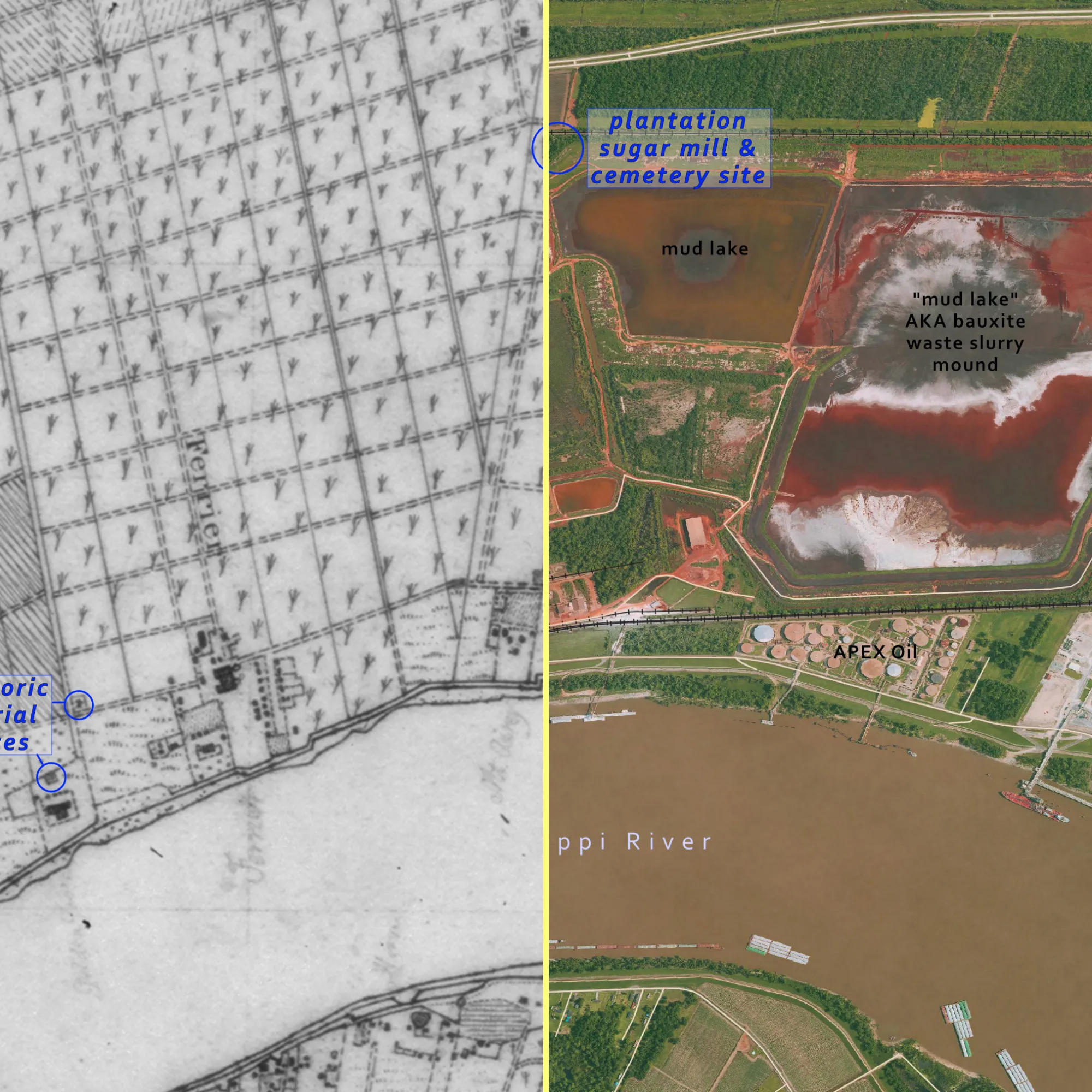
Mt Airy to ATALCO Transformation in Gramercy
Drag the bar to explore this map over time.
New rare earth plant will increase pollution impacts
Exploratory Map

Cartographic regression using archival maps from 1877
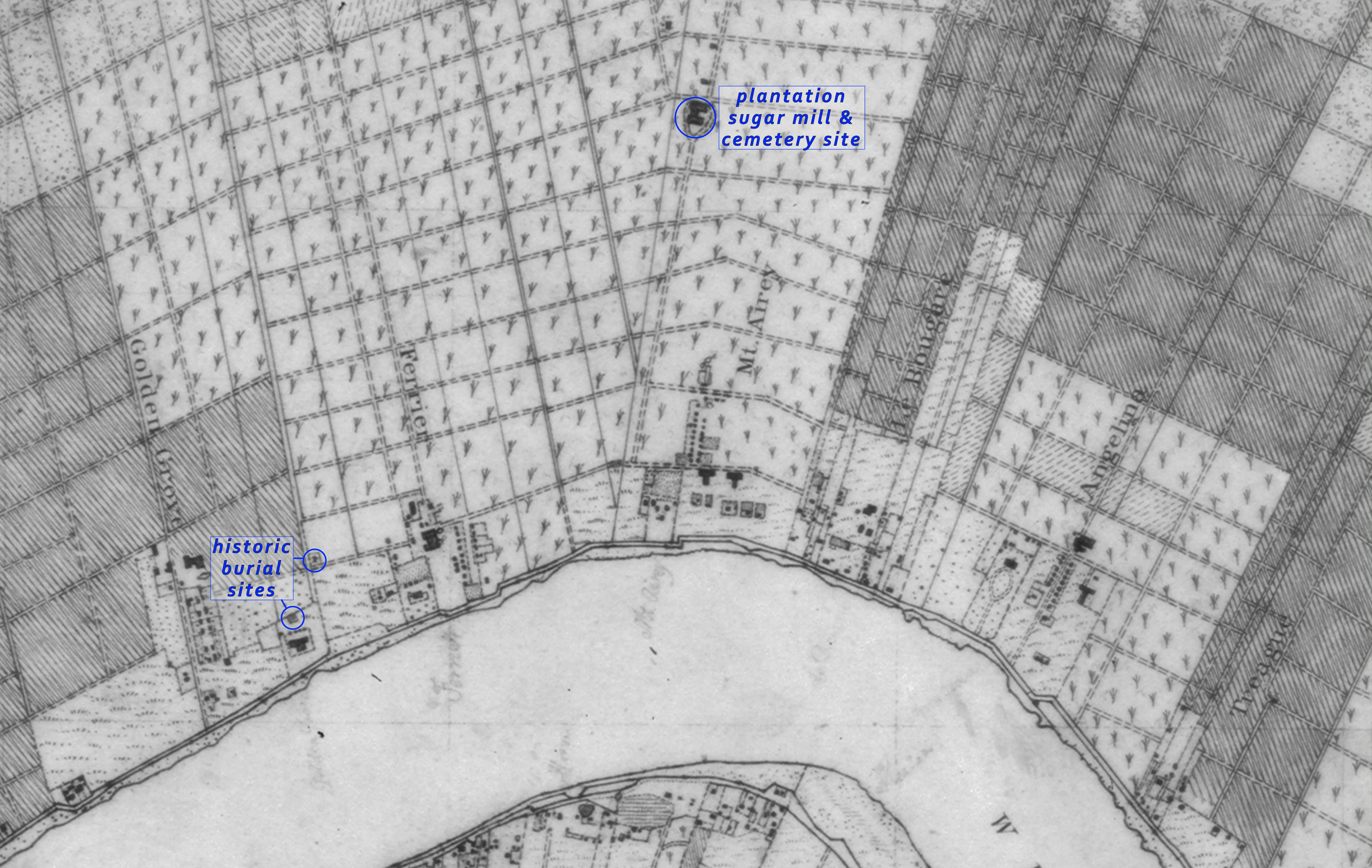
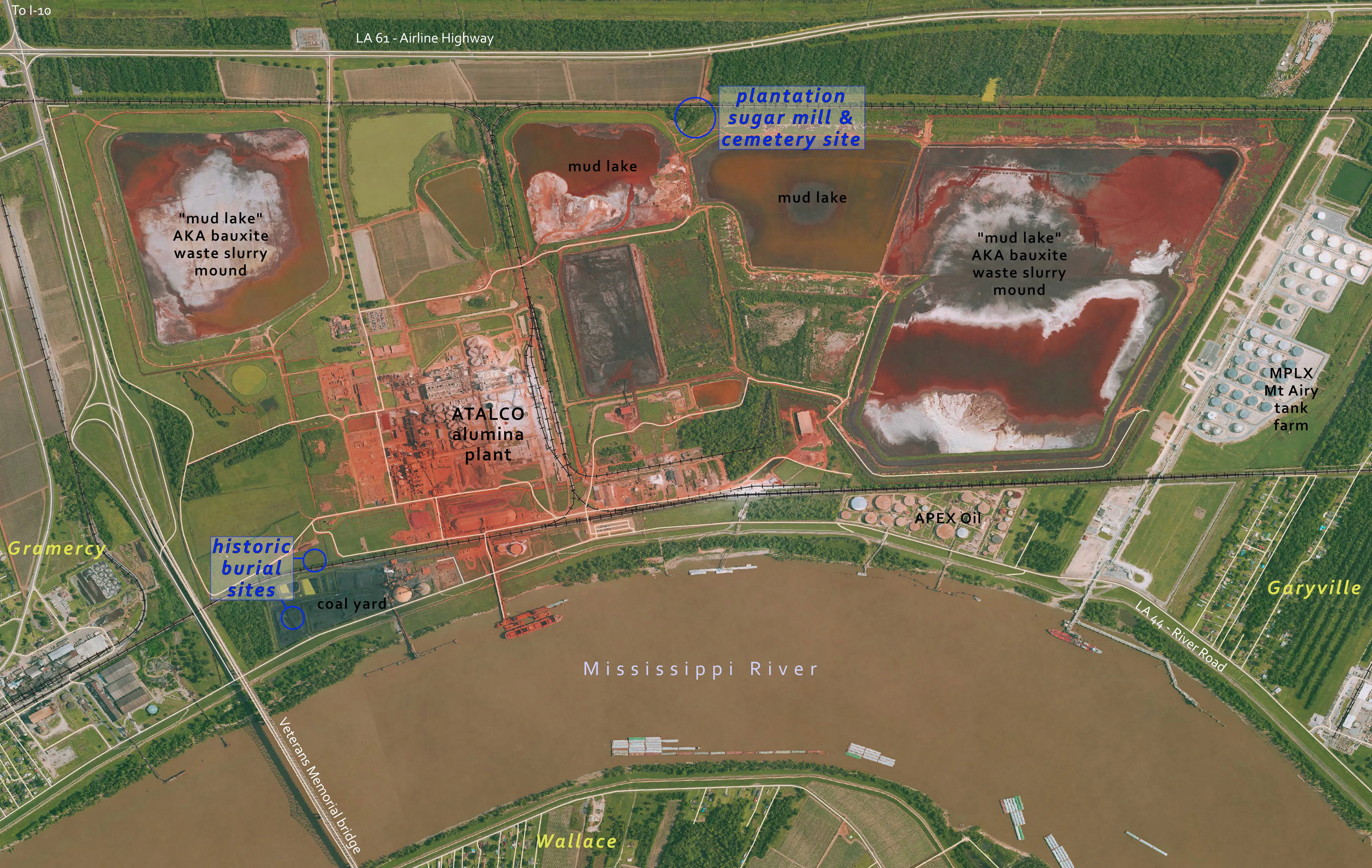
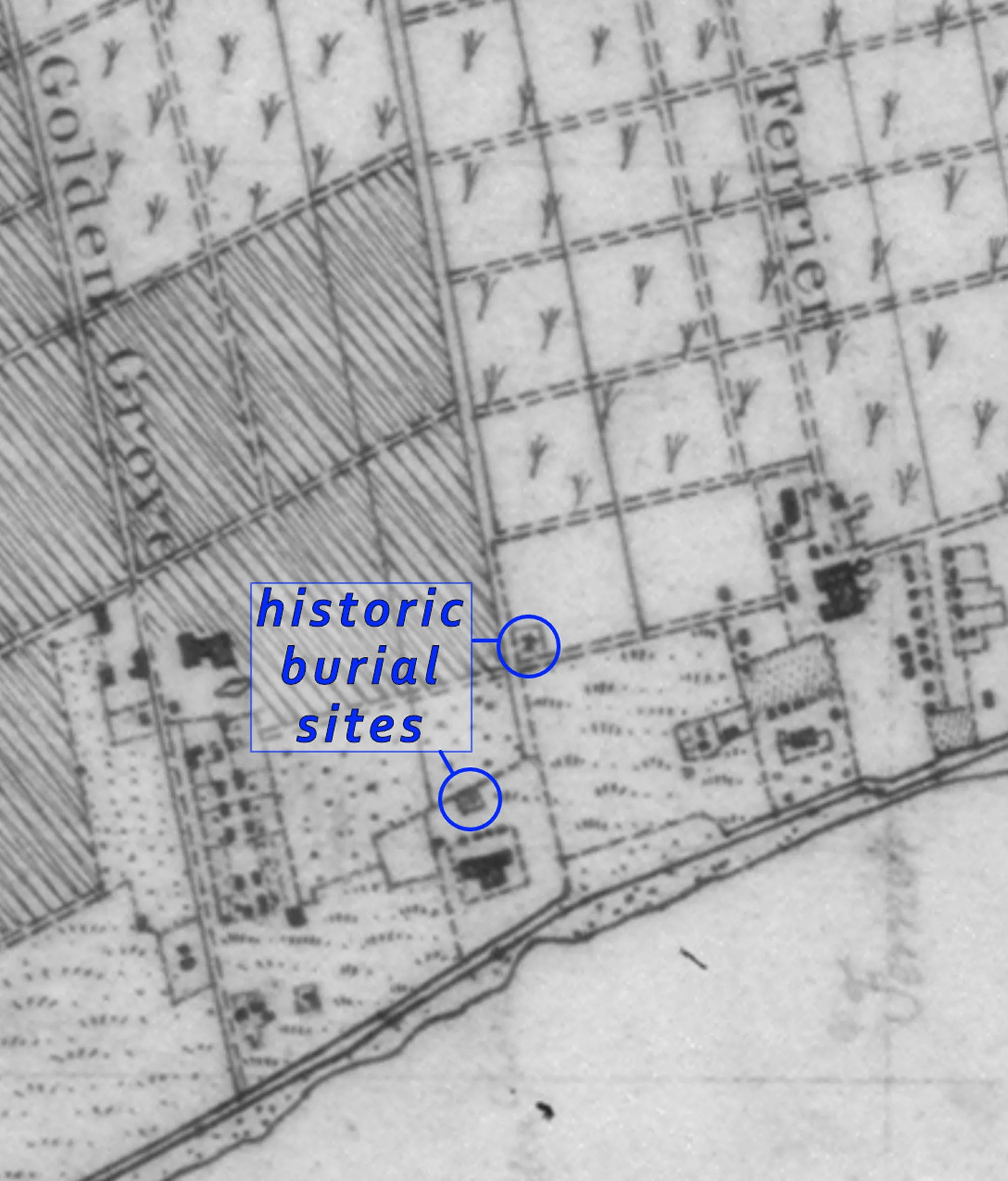
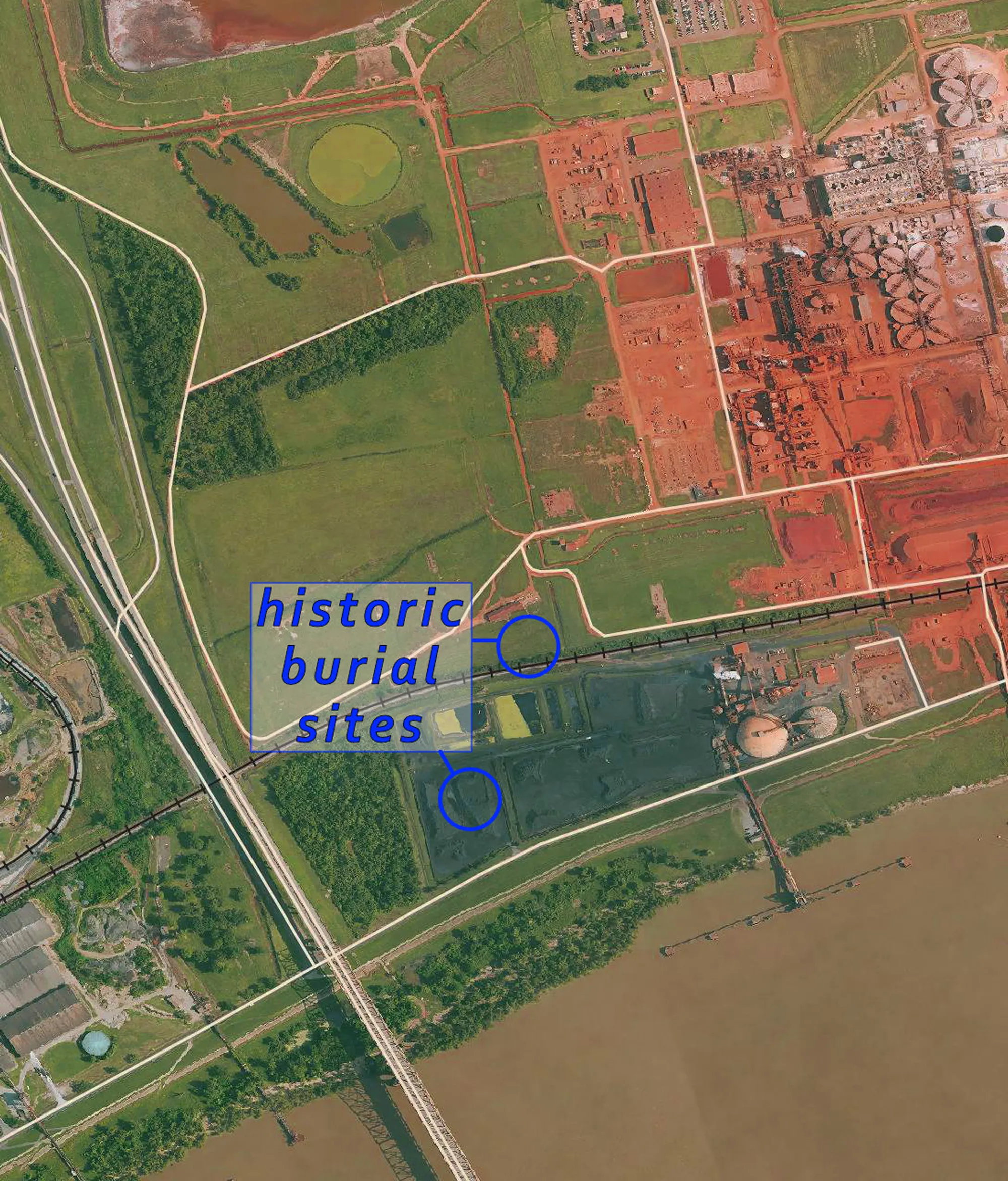
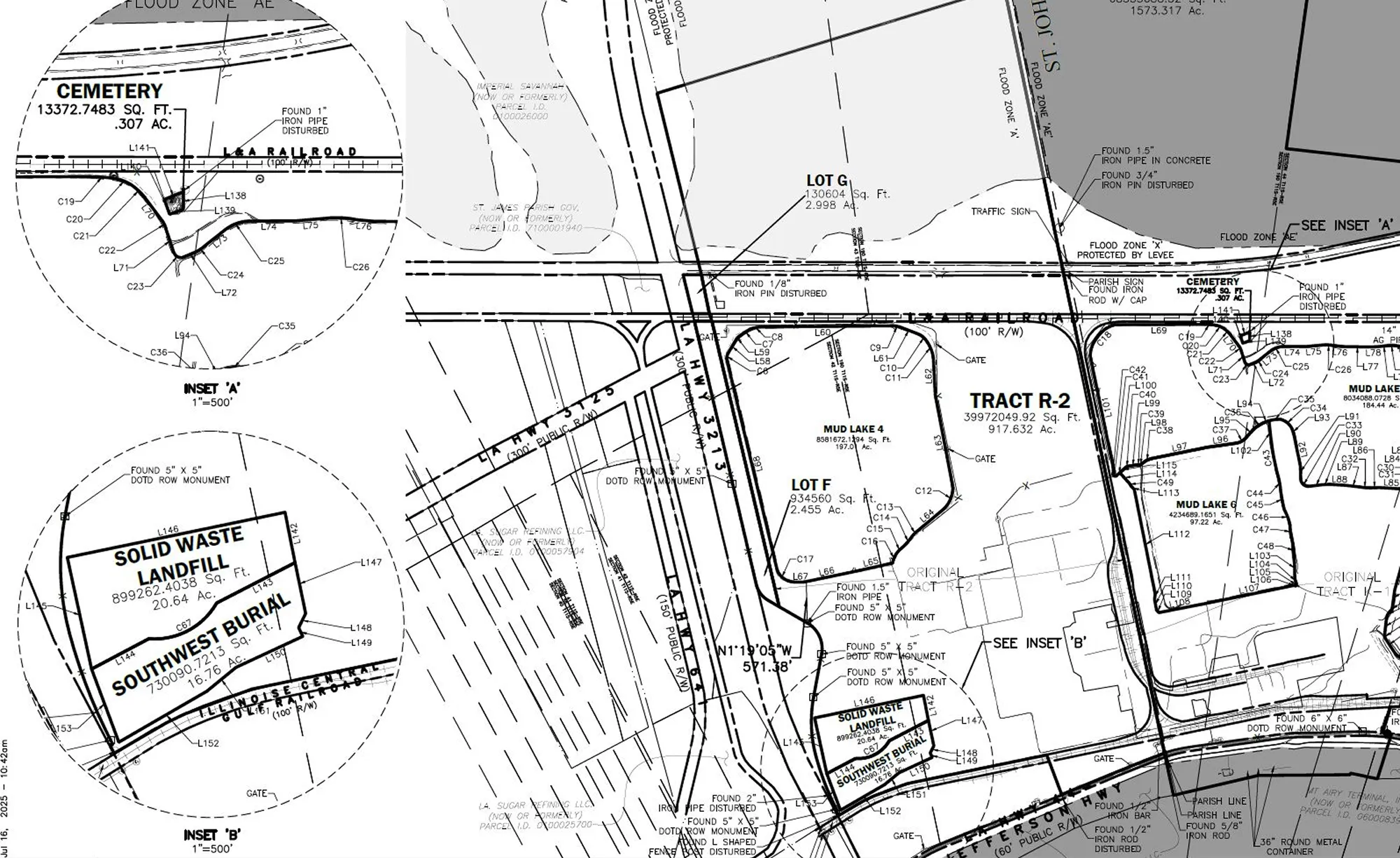
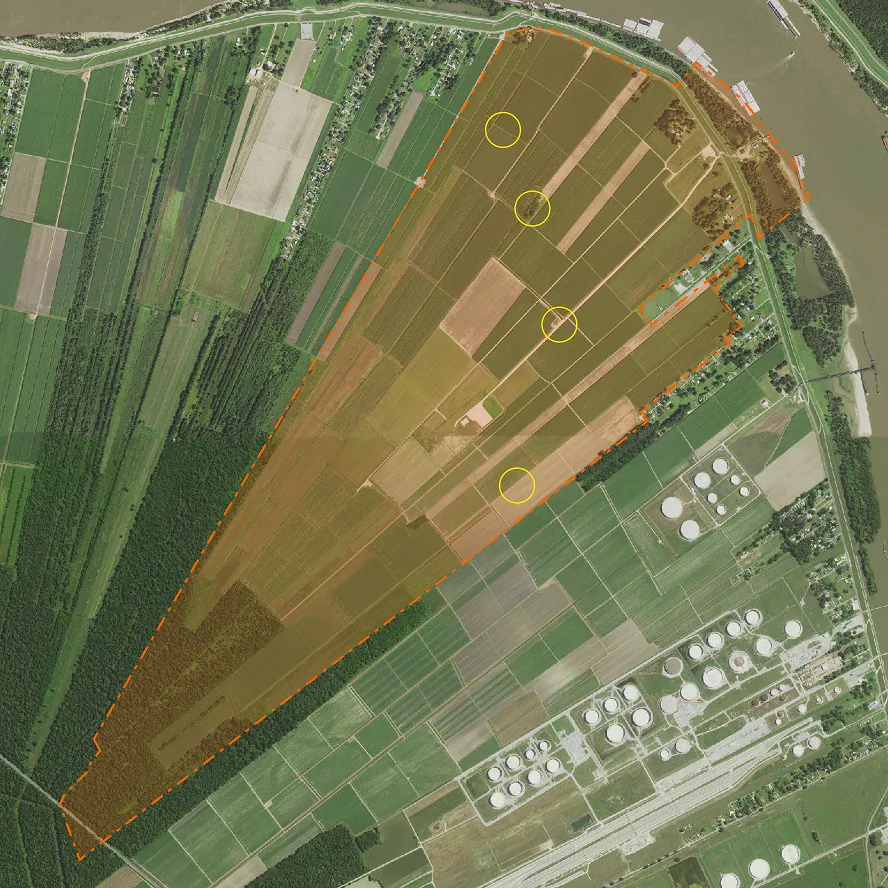
The 1877 US Coast Survey, commissioned after the Civil War, contains a wealth of historic information about the land along the Mississippi River. The surveyors took detailed notes of features of the landscape, including predominant crops grown, built structures, and importantly: the locations of human burial sites that are otherwise not documented by other early maps. This archival survey has become a go-to resource for discovering important archaeological site information, and locating in the current day using a process of image transpositions and overlays called “cartographic regression”. Field archaeology work can be conducted to confirm locations, the results of which will be published in a Cultural Resources Survey, which is required prior to any ground disturbance for proposed new construction. The 1877 map reveals that there are at least three burial sites within the boundary of the ATALCO property (see Image 1 and 2). This is partially confirmed by a recent subdivision application submitted by the property owner to St James parish planning commission (see Image 3).
New barriers to accessing public information
One of the major new challenges facing communities and advocates is Act 618, enacted by Governor Jeff Landry in 2024. Previously, Louisiana had some of the strongest public records laws in the United States, allowing citizens open access to a wide variety of documents and records related to permitting activities about proposed projects. Act 618 sought to limit that access, so that local governments and state agencies can withhold permitting and public documents using NDAs (non-disclosure agreements), claiming such information related to major economic development projects is now confidential and privileged. NDAs are a contract instrument designed to protect private parties, generally used in the practice of developing proprietary technology, and there is a new legal question about whether or not these types of agreements can be entered into by local and state governments and their officers and elected representative, who are granted power under a pledge to protect the public interest. While questions of legality are ironed out in principle, the impact of this new legislation is having a measurable impact in terms of discovering pertinent new information related to permits and project proposals in a timely fashion. As such, local communities are now having to take additional steps, hiring lawyers to legally overcome NDAs, creating additional friction points between community advocates and their local governments.