
Industrial Overload in Ascension
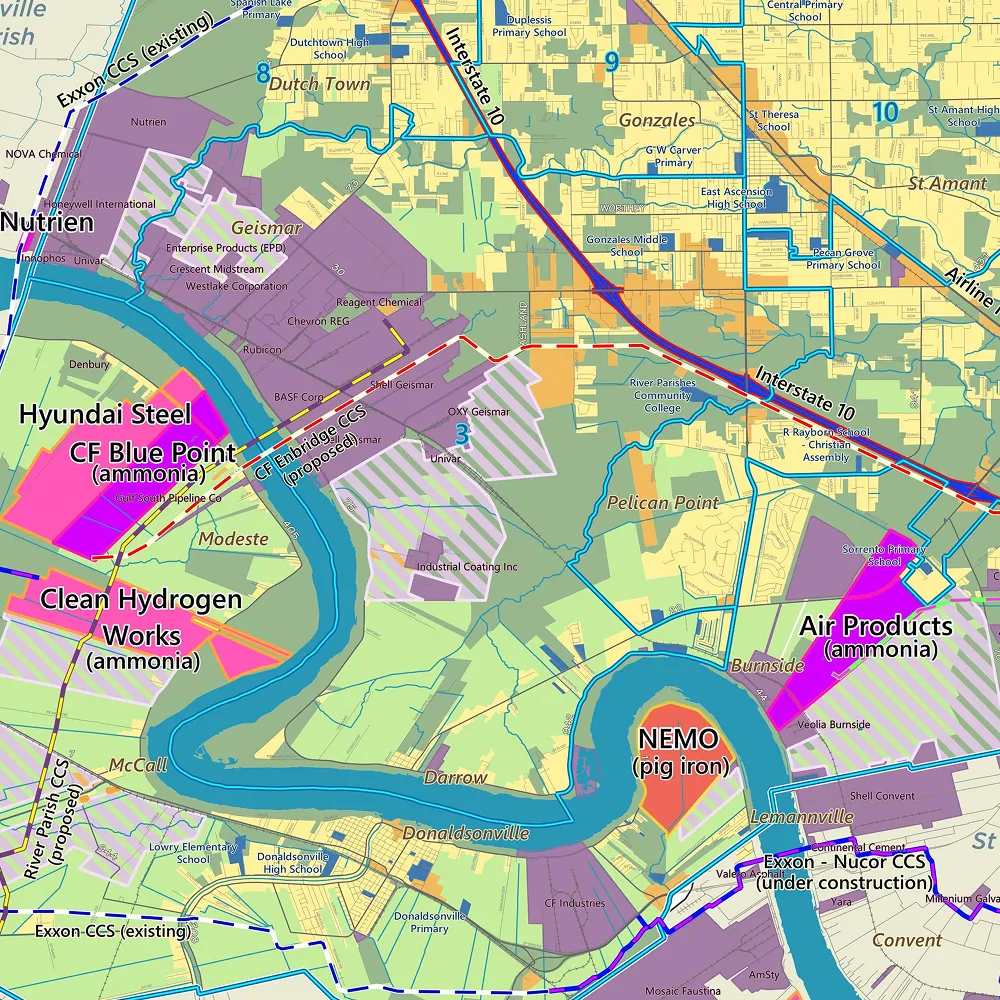
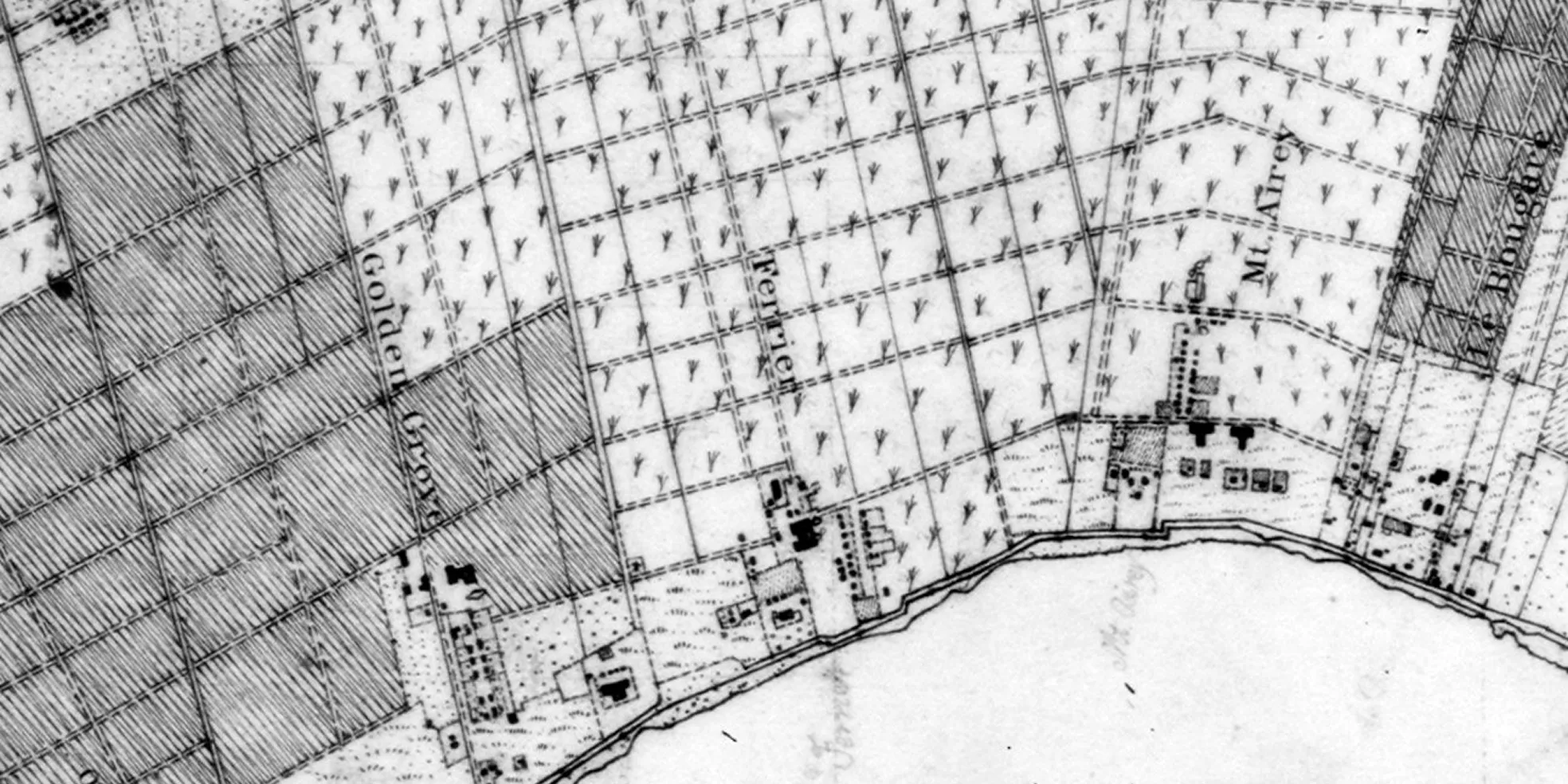
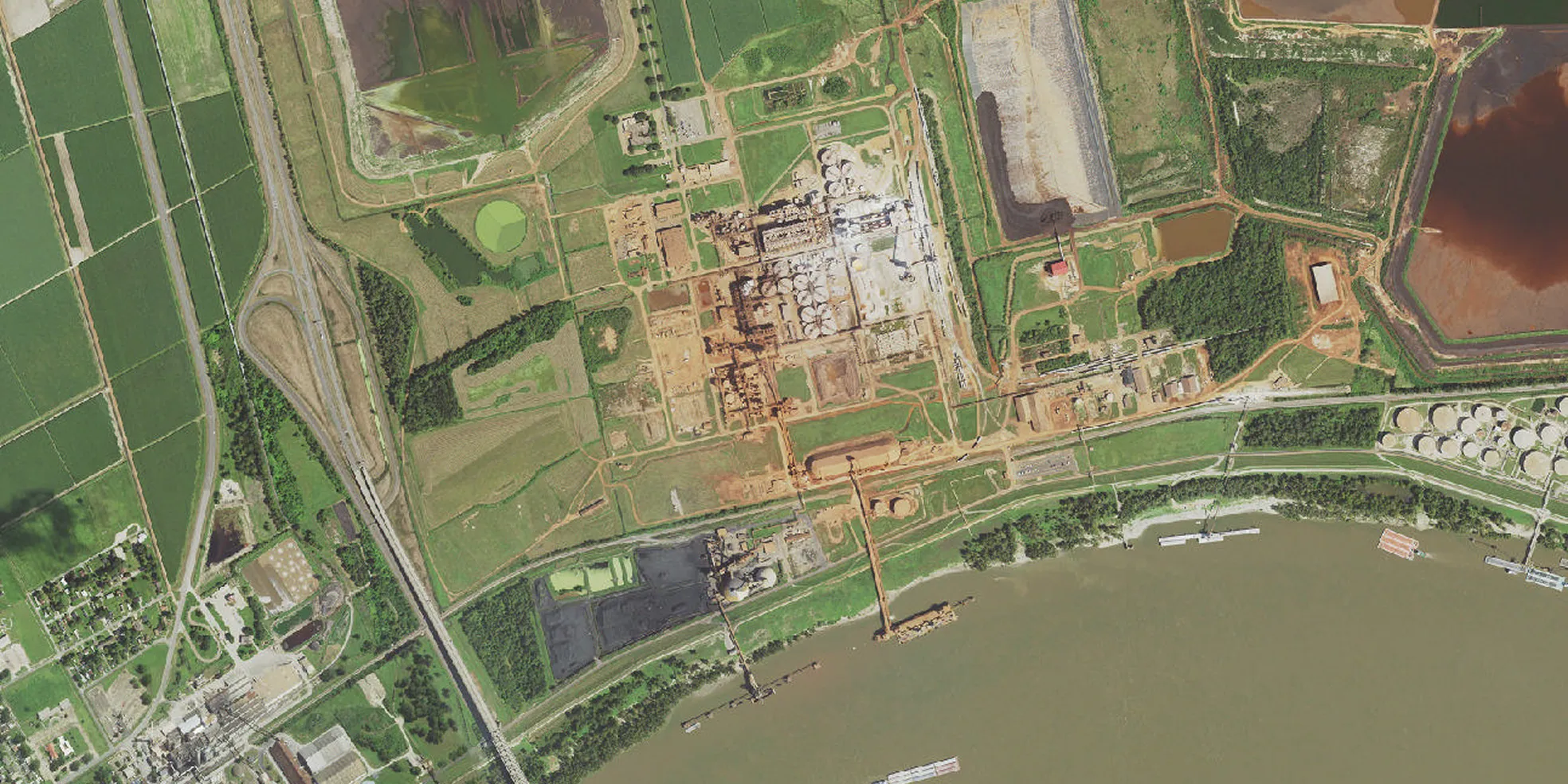
Drag the bar to explore this map over time.
Heavy Industrial Development Threatens Black Community
Exploratory Map
Create Maps to Communicate Scale of Problems
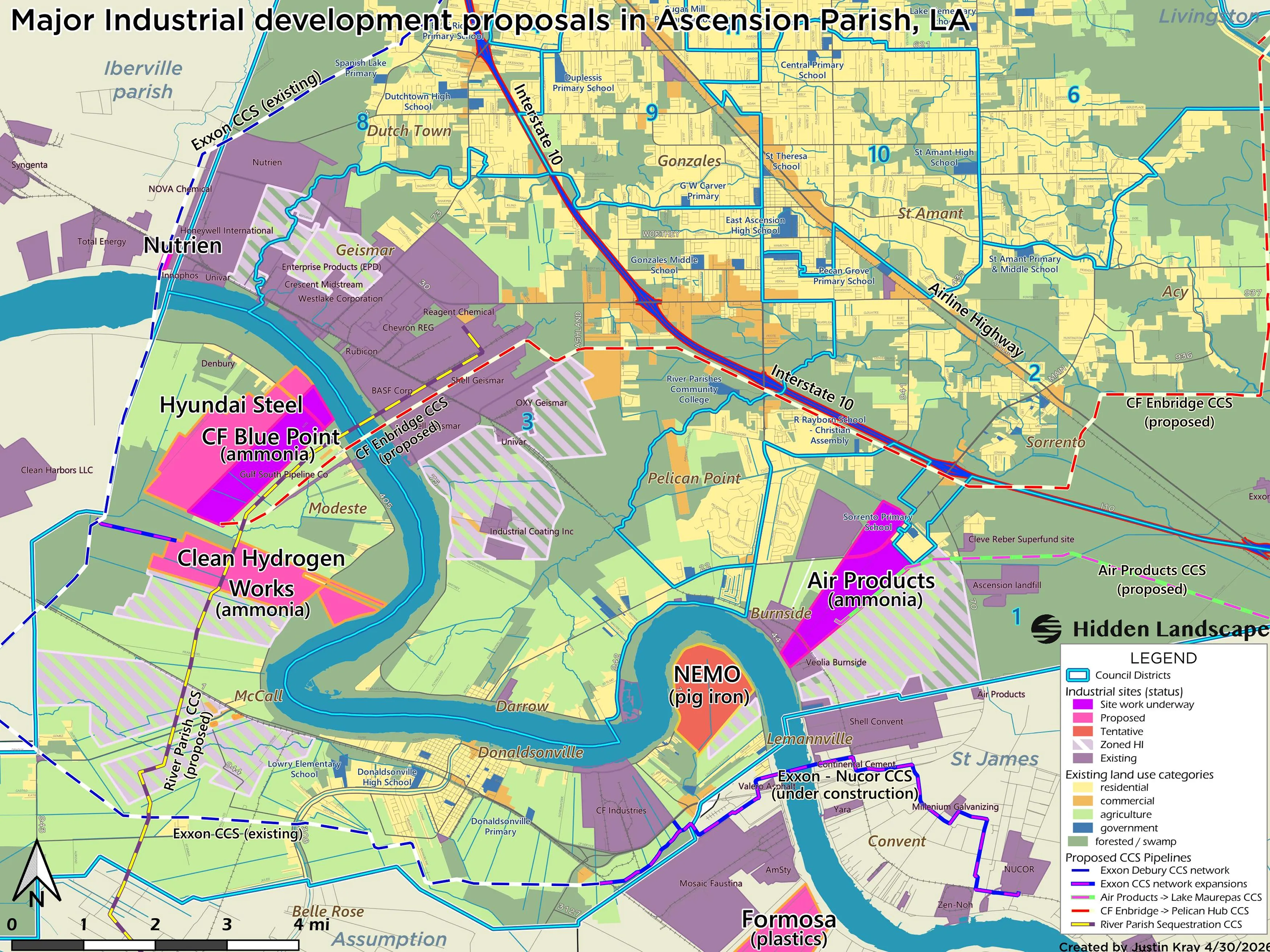
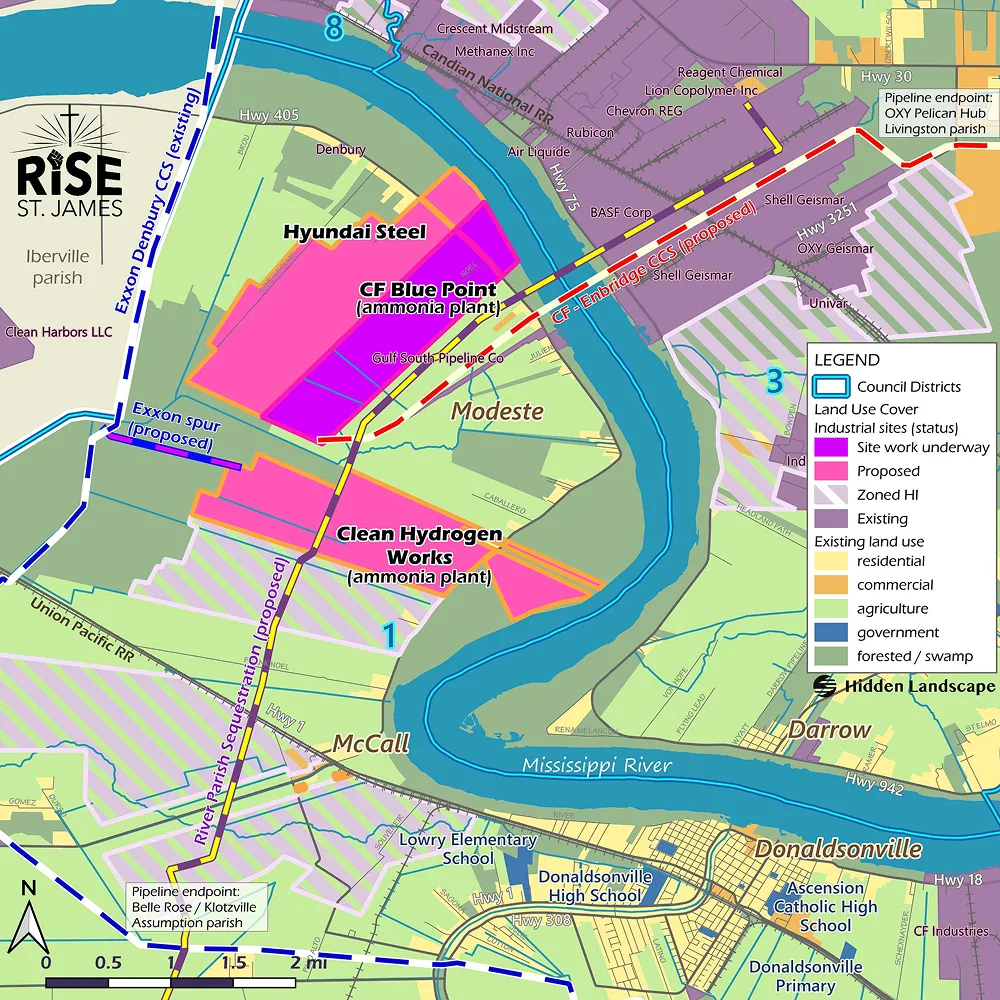
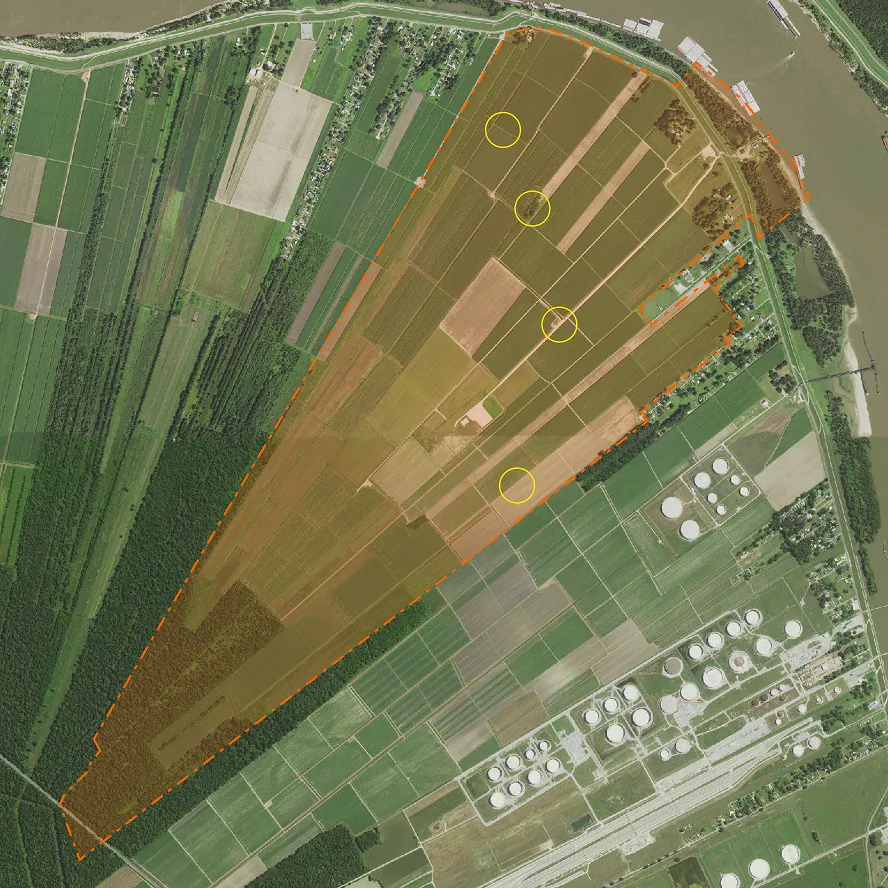
Having worked on similar issues in St James, I used a color language familiar to community activists to show the existing land use patterns. The goal was to highlight the scale and enormity of the RiverPlex industrial park schemes relative to the residential homes and towns in this area. Other large tracts of land that have been rezoned for heavy industry are highlighted, because even though the residents are already being overwhelmed by industry, it could get even worse. The only meaningful solution to consider here would be a change in policy, to pull back on the aggressive industrial encroachment, and offer some protections and buffers for the residential communities. Each of these megaprojects is banking on carbon-capture and sequestration (CCS) pipelines to make the investment work with lucrative tax credits. CCS technology has never been attempted, in this concentration or at this scale, and there are many real risks to consider: carbon dioxide gas is highly corrosive to steel, there are documented cases of it causing pipeline ruptures. When CO2 leaks, it is odorless, colorless and denser than ambient air, it hugs the ground and displaces oxygen, meaning it can asphyxiate those nearby. For these reasons, it is important to show the proximity of all school locations on the maps.
Huge win! Major CCS proposal announces cancellation
In July 2026, after three years of sustained advocacy, coalition building and community organizing, Air Products announced cancellation of their giant Ammonia plant in Ascension parish, including the CCS pipeline and injection field under Lake Maurepas. There were signs that their financial models were shifting, as Air Products sought new arrangements to sell off portions of their project to third parties, but a surprising press release announced complete reversal of their entire scheme. This news break confirms that new petro megaprojects are not inevitable, and that organized resistance can and does win BIG. If this can happen in Louisiana, a state where state leaders double down on gas and oil megaprojects in spite of steadfast community opposition and clear evidence of environmental harms, it can happen anywhere - which is a real cause for constructive optimism in a discouraging media landscape. This win would not have been possible without the momentum building across a wide and unusual coalition: from parents of school children at Sorrento elementary school, retirees at Pelican Point country club estates, to fisherman and backwoods boaters living on Lake Maurepas, and all of the advocates, lawyers, scientists and organizers.